When speaking of certain types of home extensions, like a side return or wraparound, many of our clients refer to it as a full home extension in Croydon. Since the project transforms the ground floor layout to a significant extent, it may seem partially true in common parlance. However, from a technical standpoint, we must accurately classify a single-storey extension or a ground-floor reconfiguration.
The good news is that many of these projects are Permitted Developments (PD). You can start construction right away, provided your project meets the national criteria and any local Croydon constraints, such as those in conservation areas or Article 4 Directions. Knowing your rights is essential to making informed decisions with sustainable outcomes.
At JTH Projects, we can help you in all aspects of your full-house extension in Croydon, with our comprehensive construction services tailored to your needs. So if you are considering something similar, here’s our guide to help you start with a clear idea of what your PD rights are to determine whether your project needs it or not.
Essentials of a Side-Return Extension
As Croydon continues to evolve into one of South London’s most vibrant hubs, the demand for space is at an all-time high. If you love your location but have outgrown your floor plan, a side-return extension is often the most elegant solution. Terraced properties from the Victorian or Edwardian era are a natural candidate for this type of project.
The “side return”—that narrow, often neglected strip of land running alongside the rear projection of a house—is little more than a spot for wheelie bins or a collection of forgotten garden tools. You can use this space for that supposed full-home extension in Croydon by adding an open-plan living area or extending your kitchen.
When Do You Need Planning Permission to Have a Home Extension in Croydon
The most common question we hear at JTH Projects is, “Do I need planning permission?”
These are a set of national grants that allow you to perform certain types of work without needing to apply for formal planning permission from Croydon Council. To qualify for PD, your side-return extension must adhere to specific criteria:
- Single Storey Only: To stay within PD, the extension must be a single storey.
- Width Restrictions: The extension cannot exceed half the width of the “original” house (the house as it stood in 1948 or when first built).
- Height Limits: The maximum height is 4 metres. If the extension is within 2 metres of a boundary, the eaves height is limited to 3 metres.
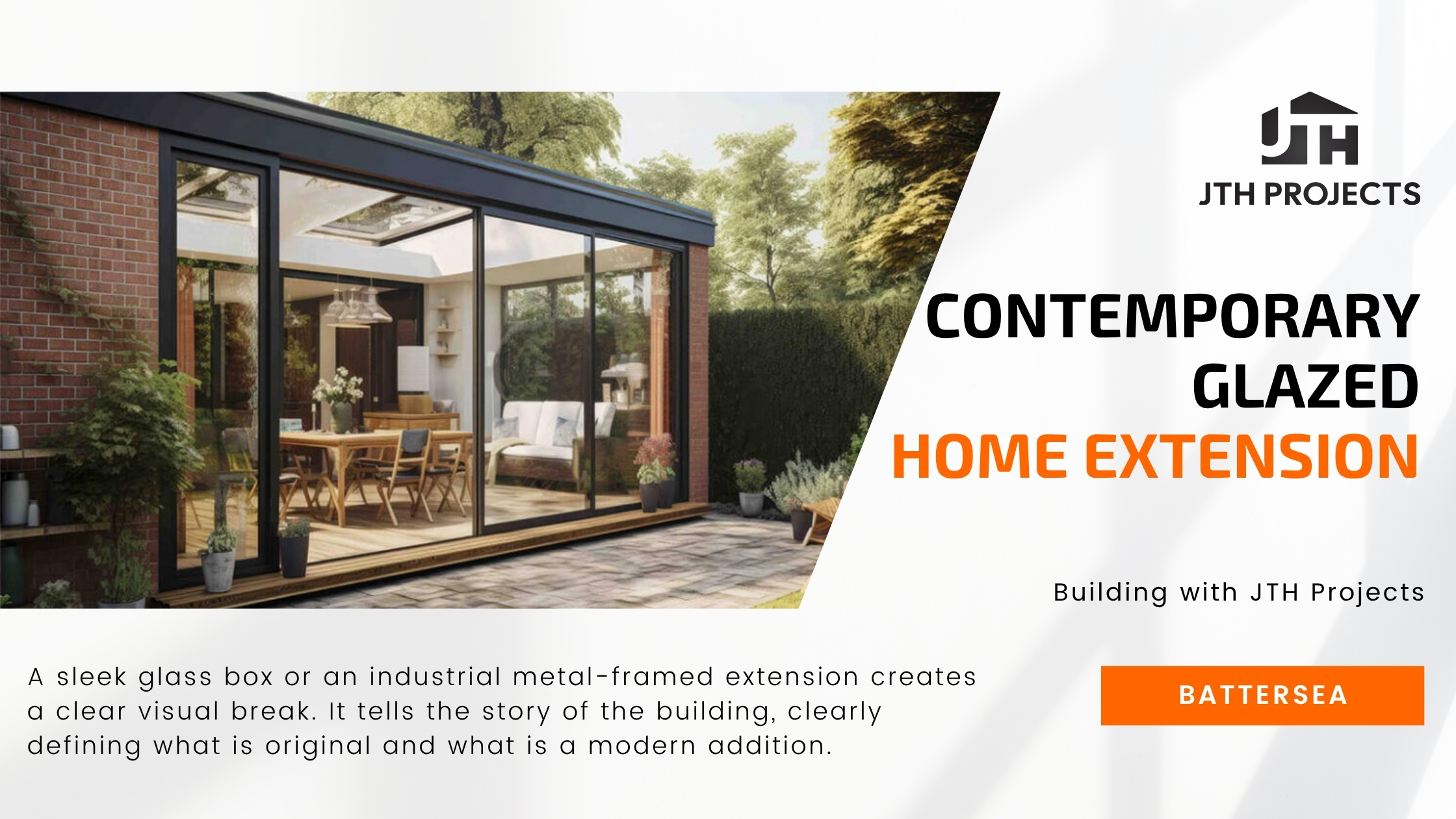
- Materials: The materials used should be of a “similar appearance” to those of the existing house, though contemporary glass roofs are a popular and often accepted exception for side returns.
The “Wrap-Around” Exception
It is important to note that while a side extension or a rear extension can be done under PD, combining them into a “wrap-around” extension usually requires full planning permission. If your vision involves turning that L-shape into a massive square footprint, you’ll likely need to engage with the Croydon planning department. Many homeowners often confuse a side return or rear extension as the same thing as a wraparound, which is not true; all these projects are quite different from each other.
Why Croydon Homeowners Choose Side Returns
Croydon’s architecture is unique, blending historic brickwork with modern urban regeneration. A side-return extension offers several specific benefits:
- Natural Light: By incorporating roof lanterns or floor-to-ceiling Crittall-style doors, you can flood a previously dark middle room with natural light.
- Property Value: In the South London market, an extra 10–15 square metres of high-quality living space can add significant value to your property, often far exceeding the cost of the build.
- Minimal Garden Loss: Unlike a deep rear extension, a side return uses “dead space,” allowing you to keep your precious garden intact for summer hosting.
How JTH Projects Elevates Your Build
At JTH Projects, we understand that a construction project is about more than just bricks and mortar; it’s about your daily life. Formerly operating as HB Constructions, our rebrand to JTH Projects reflects our evolution into a full-service partner for Croydon’s homeowners.
- Navigating the Legal Maze
Even if your project falls under Permitted Development, we always recommend obtaining a Lawful Development Certificate (LDC). This document proves your extension was legal at the time of construction—a vital piece of paperwork when you eventually come to sell your home. We handle the technical drawings and submissions so you don’t have to.
- Bespoke Design
A side return shouldn’t look like an “add-on.” We specialise in seamless integration. Whether you want to match the character of a period property with reclaimed London Stock bricks or create a striking contrast with charred timber cladding, our team ensures the finish is polished and intentional.
- Stress-Free Management
Construction can be disruptive, especially in the tight streets of Croydon. Our team is expert at site logistics, ensuring that materials arrive on time and that your neighbours are respected throughout the process. We pride ourselves on transparency—no hidden costs, no “bombastic” promises we can’t keep—just high-quality British craftsmanship.
Taking the First Step
Your home is likely your biggest asset. Expanding it is an investment in your future and your quality of life. While the rules of Permitted Development provide a fantastic opportunity, the success of the project lies in the execution. If you’re ready to see what your Croydon home is truly capable of, let’s start a conversation. At JTH Projects, we simplify the build, leaving you with a space that feels like it was always meant to be there.
Frequently Asked Questions
- When building a side extension, do I need to prove it is “half the width” of the original house?
Yes, this is a basic criterion. The “original house” refers to its footprint as it stood in 1948 (or when it was first built, if later). If a previous owner already added a small extension or an outbuilding, that space counts toward your allowance.
- Will a side-return extension affect my neighbour’s rights to light?
Even if your project is a Permitted Development, it must still respect the “Right to Light” common law. If your side return significantly blocks the natural light to a neighbour’s window that has existed for over 20 years, they could technically challenge the build. This is why we prioritise clever roof pitching and glazed side returns to ensure light is maintained for everyone.
- Do I need a Party Wall Agreement for a side return in a tight Croydon street?
Almost certainly. Because side returns typically involve digging foundations or inserting beams right up against a boundary wall. Obtaining a party wall agreement is necessary, even if you are having a permitted development.
- Can I convert my side return into a habitable room under PD?
Yes, but “Permitted Development” only covers the planning side. To use the new space as a kitchen or living area, the build must also meet UK Building Regulations. This involves specific standards for thermal insulation, drainage for new sinks, and structural stability. At JTH Projects, we manage both the PD certification and the Building Regs inspections to ensure the room is safe and legal to inhabit.
- Can I use modern materials like glass or cladding for my extension?
Under Permitted Development, the materials used for the exterior must be of a “similar appearance” to the existing house. For many Croydon homes, material matching might be general criteria even for a permitted development.